MetaG, a service developed by CEBEDEAU to manage your biological processes by analyzing biomass composition.
Why focus on biodiversity?
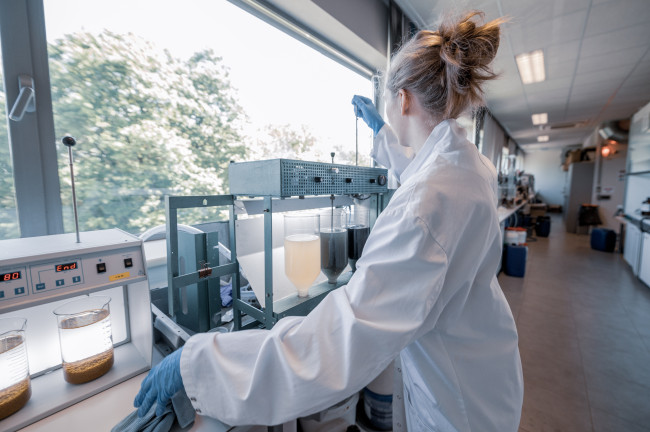
In a wastewater treatment plant or digester, the biological balance is both fragile and complex, but it allows for maximum performance.
Each microorganism plays a role: some break down organic matter, others carry out nitrification or dephosphatation. But what happens when this balance is disrupted? The consequences can be serious: filamentous growth, exceeding standards, loss of yield, etc.
In all these situations, a detailed understanding of microbial communities is essential. Understanding this biodiversity means anticipating malfunctions, optimizing yields, and even developing new processes.
MetaG: a scientific approach
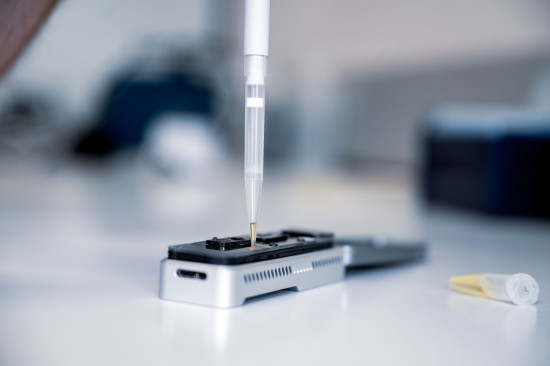
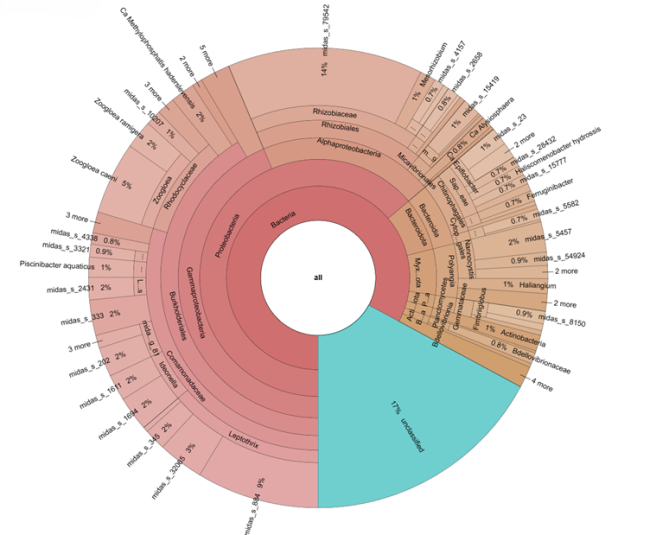
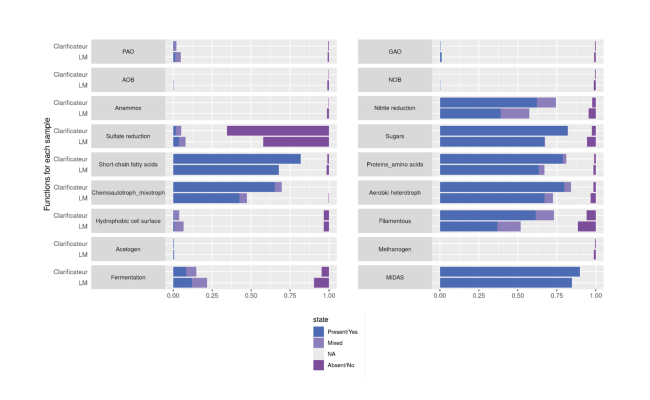
MetaG is based on advanced metabarcoding sequencing technology (16S/18S/ITS/COI) that identifies the organisms present in your samples, whether they are activated sludge, biofilms, or natural waters such as river water. This analysis is performed by a customized automated script: it checks data quality, calculates diversity indices, determines the relative proportions of species and, for bacteria in stations and digesters, associates their metabolic and structural functions.
Concrete and varied applications
MetaG is not just an analysis tool: it is a genuine management tool. It allows you to:
Anticipate malfunctions in wastewater treatment plants by taking a minimum of one sample per season, a biological reference line for your situation can be established in order to prevent any critical deviations.
Several agri-food plants are already monitored by CEBEDEAU.
Resolve specific problems, such as filamentous growth or exceedances of standards.
Optimize performance, for example, by improving biological dephosphatation through overaccumulation in WWTPs.
Innovate by developing new processes or studying unexpected phenomena.
Case studies
In an urban station facing severe filamentous bulking, MetaG confirmed the massive presence of Thiothrix (over 35%) and revealed the presence of bacteria consuming sugars and volatile fatty acids. The latter pointed the investigation towards excessive agri-food inputs as the cause. This targeted identification made it possible to quickly correct the problem upstream.
Another example: an abnormal industrial discharge of nitrites. MetaG analysis revealed an abundance of bacteria performing only partial denitrification (~70%) and a low presence of nitrifying bacteria. A two-pronged corrective action was established: biofilm control and the creation of oxic conditions.
And tomorrow?
MetaG paves the way for innovative projects: development of photogranule reactors, selection of biomass with high storage capacity, study of the impact of enzymatic treatments on microbial diversity, etc. It also makes it possible to analyze unexpected phenomena, such as the formation of spherical algal-bacterial macrostructures in activated sludge plants.
Manage your biological treatment with MetaG. To find out more or receive an analysis tailored to your needs, contact our team at [email protected].