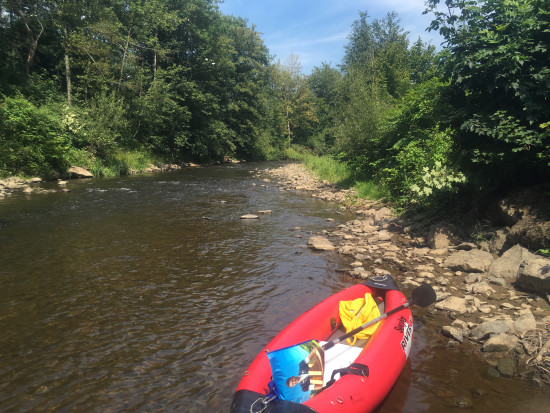
Context: The AquaBioSens project focuses on natural waters, including rivers, lakes, natural pools, and ponds. Its objective is to create a bioindicator for (fresh)water quality through genomic analysis of aquatic biofilm community composition. The developed bioindicator will complement the biological diatom index (BDI), the trophic indice of macrophytes (TIM), global indice for biology, normalized global biological index (NGBI), etc. Until now, these indices are inferred from microscopic analyses, which are (1) relatively lengthy, (2) are conducted only at low frequencies, (3) require a physical capture of the target organism, and (4) may result in a low detection rate. In addition, the investigations are done by taxonomic specialists, which is an expertise that is becoming more and more rare over time.
Project: investigate the aquatic biofilm (periphyton) community composition, in order to utilize it as a bioindicator. Periphyton, being located at the base of the food chain, offers unique capacity since any alteration to its composition or operation has the potential to alter the biodiversity and higher trophic levels. Consequently, the early detection of a perturbation in the periphyton may enable the prediction (and mitigation) of potential long-term effects at higher trophic levels and thus biodiversity.
Additionally, this bioindicator will be of interest to public authorities, businesses, research institutes, NGOs, environmental organizations, and individuals for the following purposes:
− developing policies and guidelines for investments regarding land use and
environmental infrastructure;
− monitoring natural water bodies;
− detecting chronic or accidental pollution;
− establishing a reliable measure of the quality of recreational waters.
Objectives:
− Establish the methodology for a rapid, simple but sensitive bioindicator (macroand micropollutants); SWaM@Sc Smart Water Management @cross Scales
− Define the constraints and conditions to develop the methodology in a diagnostic kit.