Among the thousands of substances in the PFAS family, TFA (trifluoroacetic acid) is undoubtedly the one that presents the most paradoxes: it is the smallest, the most abundant in the environment, and yet one of the most complex to analyze accurately. After more than a year of work on PFAS analysis, CEBEDEAU has finalized the optimization of its method dedicated to TFA.
What is TFA?
TFA is a PFAS with a very short carbon chain. Unlike so-called “long-chain” PFAS such as PFOS or PFOA, its small size gives it high mobility in the environment. It is precisely this mobility, combined with its very high persistence, that makes it a closely monitored molecule today.
It is found in the Walloon environment through several pathways: atmospheric degradation of fluorinated gases used as refrigerants or solvents, direct industrial discharges, and the degradation of many other PFAS, including certain fluorinated pesticides used in agriculture.
A Regulatory Framework Under Development
The Walloon Government has tasked the Independent Scientific Council (CSI) on PFAS with assessing the toxicity of TFA and proposing guideline values. Result: a maximum concentration of 2.2 µg/l is now recommended in the Walloon drinking water network. Furthermore, TFA is expected to be included in the new Environmental Quality Standards (EQS), alongside the 24 PFAS already covered.
A high-precision analytical method
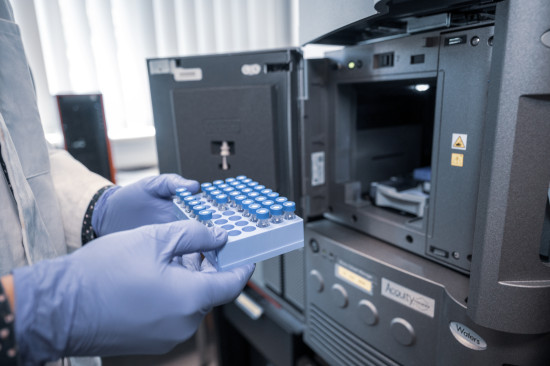
CEBEDEAU has developed and optimized a direct injection method using UPLC-MS/MS. This approach achieves a limit of quantification of 50 ng/L, ensuring sensitive measurement even in the presence of complex matrices.
Comprehensive support from start to finish
Drawing on its expertise in micropollutant analysis, CEBEDEAU supports you in monitoring TFA in your aqueous matrices, interpreting analytical results, and evaluating treatment solutions tailored to your specific situation. Our multidisciplinary teams provide personalized scientific support to address your regulatory and environmental challenges.
TFA is also known for its resistance to conventional treatment processes. CEBEDEAU develops and evaluates solutions to improve its removal, optimize wastewater treatment processes, and anticipate future regulatory requirements.